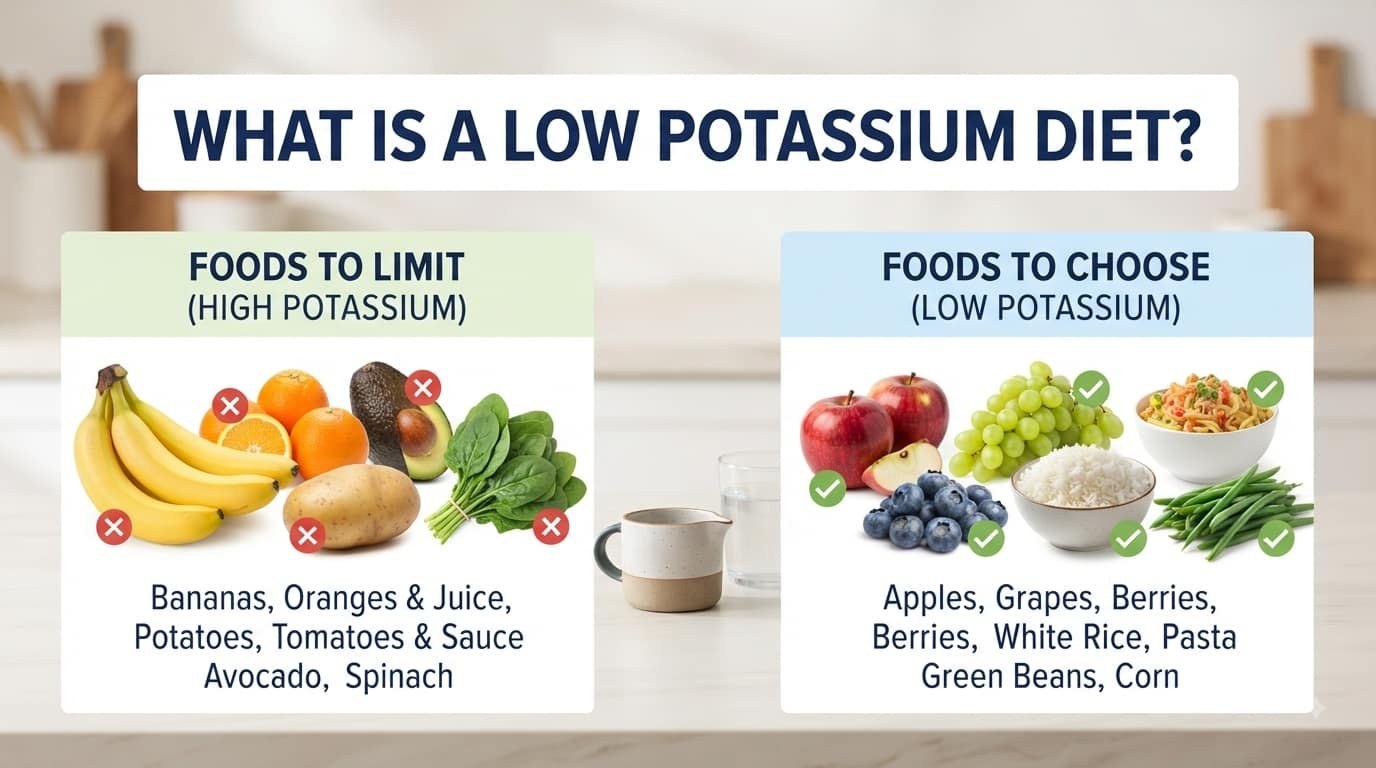
Learn how a low potassium diet helps your kidneys stay healthy. Discover easy meal plans, safe foods, and tasty recipes in this simple guide.
When your kidneys get tired, they cannot clean extra minerals out of your blood the right way. One mineral that can build up is potassium. A low potassium diet is a special eating plan that helps keep your mineral levels safe and steady. Doctors often suggest this plan to protect your kidneys and give them a break. Potassium is found in many healthy foods like bananas and oranges, but too much of it can make your heart beat in funny ways when your kidneys are not working well.
Table of Contents
Changing how you eat might feel tricky at first, but it is all about making smart swaps. Instead of grabbing high-potassium snacks, you learn to pick choices that are gentle on your body. Think of it as a helpful team effort between you and your healthcare provider. You are taking charge of your daily health one simple meal at a time. By learning the basics early on, you can enjoy your meals without any extra worry.
Why Your Kidneys Need Help Managing Potassium
Your kidneys act like tiny, busy cleaning machines inside your body every single day. They filter extra water and waste out of your blood to make urine. When healthy, they keep the right amount of salt, water, and minerals like potassium inside you. If your kidneys get weak or sick, they miss spots and leave too much potassium floating around in your blood. This can make you feel very tired or weak.
Following a low potassium diet for kidneys takes the heavy load off these hard-working organs. It stops dangerous mineral build-up before it can cause serious heart trouble. Many people do not realize how closely their heart and kidneys work together as a team. When you lower your daily intake, your whole body feels lighter and more balanced. It is a powerful way to support your long-term wellness right from your own kitchen.
How to Understand What Is a Low Potassium Diet
Learning about a what is a low potassium diet plan is much easier than you might think. It simply means keeping track of how many milligrams of potassium you eat and drink each day. Most doctors or dietitians will give you a specific daily limit to follow. You then use food labels and safe lists to stay safely under that target number. You do not have to starve or give up flavor; you just have to choose different ingredients.
A big part of this lifestyle is learning how certain cooking steps can actually wash away extra minerals. For example, soaking certain vegetables in water before cooking them removes a lot of natural potassium. This clever trick is called leaching, and it is a total game-changer for home cooks. You quickly learn which fruits and veggies are your best friends and which ones to skip. Knowledge is your best tool for staying happy and healthy.
Best Low Potassium Diet Foods to Keep in Your Fridge
Stocking your kitchen with the right ingredients makes everyday cooking fun and stress-free. When you look for low potassium diet foods, you want to focus on items that are kind to your kidneys. Great choices include crisp apples, fresh berries, white rice, and delicious pasta. You can also enjoy skinless chicken breast, white bread, and tasty cauliflower without any worry. These foods give you great energy without overloading your blood with extra minerals.
It is always smart to check food packages when you go grocery shopping at your local store. Look for hidden ingredients or salt substitutes, because many salt substitutes use potassium chloride instead of sodium. That can sneak extra potassium into your meals without you even knowing it. Sticking to fresh, whole ingredients that you prepare yourself is always the safest route. Your fridge will look colorful, fresh, and ready for action.
Safe Fruit and Vegetable Choices for Daily Meals
Eating your greens and fresh fruits is still super important for a balanced lifestyle. You just have to pick the right varieties that fit your daily goals. Apples, grapes, watermelons, and pineapples are fantastic fruit options that will satisfy your sweet tooth safely. For vegetables, try adding crisp cucumbers, green beans, and summer squash to your dinner plate. They taste wonderful and keep your mineral numbers right where your doctor wants them.
You should try to steer clear of bananas, oranges, potatoes, and tomatoes because they pack a massive punch of potassium. If you really love potatoes, remember the soaking trick we talked about earlier to lower the mineral count. Mixing up your veggie choices keeps your meals exciting and stops you from getting bored. Eating healthy should always feel like a delicious treat, not a boring chore.
Easy Sample Low Potassium Diet Menu Ideas
Planning out your daily meals ahead of time takes away all the daily guesswork. A great sample low potassium diet menu starts with a cozy breakfast of scrambled egg whites and white toast. For lunch, you can enjoy a tender turkey sandwich on white bread with crisp lettuce and mayo. Dinner can feature baked chicken breast served alongside fluffy white rice and steamed green beans. It is simple, filling, and completely safe for your kidneys.
Snack time can also be bright and fun when you keep the right foods handy. Grab a handful of unsalted popcorn or a small bowl of fresh blueberries for a quick energy boost. Drinking plenty of water throughout the day keeps you hydrated and feeling your absolute best. You never have to feel restricted when you have a solid menu plan ready to go. Consistency is the secret key to feeling great every single day.
Step-by-Step 7-Day Meal Plan for Low Potassium Diet Success
Having a full 7-day meal plan for low potassium diet success helps you stay organized all week long.
- Monday: Egg white omelet for breakfast, chicken wrap for lunch, and baked fish with rice for dinner.
- Tuesday: Oatmeal made with almond milk for breakfast, turkey sandwich for lunch, and pasta with mild cream sauce for dinner.
- Wednesday: White toast with butter for breakfast, tuna salad for lunch, and grilled chicken with squash for dinner.
- Thursday: Scrambled eggs for breakfast, leftover chicken wrap for lunch, and beef strips with white rice for dinner.
- Friday: Berry smoothie made with safe fruits for breakfast, egg salad sandwich for lunch, and pork chops with green beans for dinner.
- Saturday: Pancakes made from scratch for breakfast, turkey and cheese wrap for lunch, and baked chicken with noodles for dinner.
- Sunday: Waffles for breakfast, chicken noodle soup for lunch, and roast beef with white potatoes that have been properly soaked for dinner.
Following a 7 day meal plan for low potassium diet routines makes grocery shopping super easy because you can buy only what you need. You will save money, waste less food, and protect your health all at the exact same time.
Helpful Low Potassium Diet Recipes for Every Meal
Cooking tasty meals at home is the best way to control every single ingredient that goes into your body. Finding great low potassium diet recipes lets you explore new flavors without breaking any health rules. Try making a creamy cauliflower soup using heavy cream and garlic powder for a rich, comforting lunch. You can also whip up a delicious honey-glazed chicken breast served over a bed of warm white rice.
Do not be afraid to use herbs and spices to make your food taste amazing. Garlic powder, onion powder, black pepper, and fresh parsley add incredible flavor without adding any extra sodium or minerals. Cooking from scratch lets you taste real, wholesome food just the way nature intended. Grab your favorite apron and start experimenting in your kitchen today.
Why You Should Download a Low Potassium Diet PDF Guide
Keeping a handy low potassium diet pdf saved on your phone or printed out is a smart move. You can take it with you to the grocery store or look at it when you are dining out at a restaurant. It gives you instant access to safe food lists, serving sizes, and quick meal ideas whenever you need them. Having quick answers right in your pocket stops you from guessing when you are hungry and in a rush.
Many helpful health websites and kidney foundation pages offer free downloadable guides that you can save instantly. Look for charts that show high-potassium foods right next to their safe, low-potassium swaps. It acts like a cheat sheet for your new healthy lifestyle. Share the guide with your family members so everyone knows how to help you cook safe and delicious meals.
Simple Shopping and Dining Out Tips for Kidney Health
Heading to the grocery store or going out to eat with friends should always remain an enjoyable experience. When shopping, always read the nutrition facts panel on the back of packaged foods to check ingredient lists. When dining at restaurants, ask your server to hold the high-potassium side dishes like baked potatoes or tomato sauces. You can easily ask to swap them out for white rice, green beans, or a side salad with safe veggies.
Never feel shy about telling your waiter or chef about your dietary needs. Most restaurants are more than happy to customize your plate to keep you safe and healthy. Planning ahead before you leave the house ensures you never get stuck without a safe food option. Enjoying your social life while taking care of your kidneys is completely possible with a little bit of planning.
Frequently Asked Questions
What happens if I eat too much potassium?
Eating too much potassium when your kidneys are weak can cause a dangerous buildup in your blood. This can lead to muscle weakness, extreme tiredness, or serious heart rhythm issues.
Are all fruits high in potassium?
No, not all fruits are high in potassium. Safe options like apples, berries, grapes, and watermelons have much lower amounts than bananas or oranges.
Can I use salt substitutes on this diet?
Most salt substitutes use potassium chloride instead of sodium to mimic regular salt. You should check with your doctor before using them because they can overload your body with minerals.
How do I remove potassium from potatoes?
You can lower the potassium in potatoes by peeling them, cutting them into small pieces, and soaking them in warm water for several hours before cooking.
Do I need to follow this diet forever?
Your doctor or dietitian will decide how long you need to follow this plan based on how well your kidneys are healing and functioning over time.
Is chicken safe to eat on a kidney-friendly plan?
Yes, skinless chicken breast is a lean, safe protein source that fits wonderfully into your daily meals without adding extra minerals.
Conclusion
Taking charge of your health by following a low potassium diet is one of the kindest things you can do for your body and your kidneys. By choosing safe foods, planning your weekly meals, and using smart cooking tricks, you can enjoy delicious food every single day. Remember that small daily changes add up to big health wins over time. Why not start your journey today by organizing your fridge or picking out a brand new recipe to try tonight? Drop a comment below to share your favorite kidney-friendly meal idea with our community!